
“Choosing between PHP and Node.js isn’t about power, it’s about purpose. PHP offers quite stability, the kind you can rely on when everything needs to just work. Node.js brings speed and life, pushing ideas forward in real time. In the end, the stronger choice is the one that understands your vision and helps it breathe.”
Choosing between PHP vs Node.js is not just a technical decision; it’s a moment that defines how your application will behave, scale, and survive in the real world. Behind every fast website, every smooth user experience, and every scalable platform, there is a backend quietly doing the heavy lifting. And the question every developer, startup, or business eventually asks is simple but powerful:
Which backend technology is more powerful, PHP or Node.js?
The truth is emotional and practical at the same time: there is no absolute winner. There is only the right fit for your journey.
What is PHP?
PHP is one of those technologies that has quietly shaped the internet without ever asking for recognition. It is one of the oldest and most trusted backend languages in the web world, and for decades, it has been the invisible force behind millions of websites. From personal blogs to powerful CMS platforms, PHP has consistently powered content-driven experiences with reliability and calm stability. It doesn’t try to be flashy or overly modern; instead, it focuses on doing its job well, day after day, without breaking trust. That quiet consistency is exactly why so many systems still depend on it today.
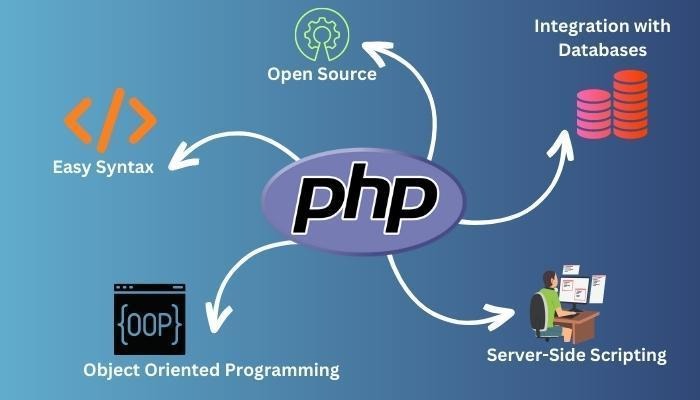
Key Characteristics of PHP
- Simple to learn
PHP has a gentle learning curve, making it approachable for beginners stepping into backend development. - Highly stable
It has matured over decades, offering a dependable environment for long-term projects. - Extremely widely supported
Almost every hosting platform supports PHP, making deployment easy and accessible. - Perfect for traditional web applications
It excels in building CMS-based websites, blogs, and e-commerce platforms.
For many developers, PHP feels like a foundation that just works. It may not always be the newest or the fastest, but it carries something more valuable: trust. For years, it has powered the web silently, consistently, and reliably, becoming the backbone of countless digital experiences without ever needing the spotlight.
What is Node.js?
Node.js is a modern backend runtime built on JavaScript, and it represents a shift in how developers feel about building systems. It didn’t just introduce a new way of writing backend code; it changed the rhythm of development itself. With its non-blocking, event-driven architecture, Node.js makes everything feel immediate, responsive, and alive. Instead of waiting for one task to finish before starting another, it keeps things moving smoothly and continuously like a system that never loses momentum.
Something is exciting about working with Node.js. It feels modern, energetic, and built for the pace of today’s digital world. It gives developers the power to build applications that respond instantly, scale effortlessly, and handle real-time interactions with ease. It is not just a tool; it feels like a mindset shift toward speed, efficiency, and fluidity.
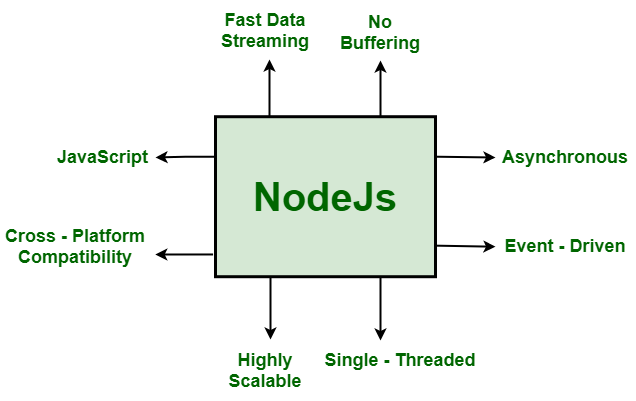
Key Characteristics of Node.js
- Fast and scalable
Designed to handle large numbers of simultaneous connections with ease, making it ideal for growing applications. - Perfect for real-time applications
From chat apps to live dashboards, Node.js shines where instant updates matter most. - Built for modern APIs and microservices
It supports flexible architectures that break large systems into smaller, manageable services. - Ideal for full-stack JavaScript development
Developers can use JavaScript on both the frontend and backend, creating a unified development experience.
Node.js feels like momentum. It’s the sensation that everything is happening at once, without delay or friction. For many developers, it represents not just performance but possibility.
PHP vs Node.js: The Difference
This comparison goes beyond technical differences; it speaks directly to how developers experience their work. PHP carries the weight of stability and tradition. It feels familiar, grounded, and dependable, like something that has stood the test of time without ever losing its purpose. Working with PHP often brings a sense of comfort, a quiet reassurance that things will continue to work as expected, without unnecessary surprises.
Node.js, on the other hand, feels completely different. It represents innovation, speed, and constant movement. It pushes you forward, encourages experimentation, and makes you feel like you’re building something modern and alive. Where PHP gives you comfort, Node.js gives you momentum. One wraps you in safety, while the other drives you toward progress and possibility. In the end, it’s not just about choosing a backend, it’s about choosing the feeling you want while you build.
| Feature | PHP | Node.js |
| Language Type | Scripting (PHP) | JavaScript runtime (Node.js) |
| Execution Model | Synchronous (one request at a time per thread) | Asynchronous, non-blocking (handles many at once) |
| Performance | Improved with PHP 8.1’s JIT and Fibers; fast for content-heavy apps | Excels at I/O-bound, concurrent workloads; performance leader in real-time/async scenarios |
| Scalability | Traditionally monolithic; new support for async with Fibers | Built for microservices and horizontal scaling |
| Ecosystem | Composer, Packagist, mature frameworks (Laravel, Symfony) | npm, >1M packages, modern frameworks (Express, NestJS) |
| Security | Strong, but legacy issues persist (SQLi, XSS) | Vulnerable to NoSQLi, XSS; strong with best practices |
| Learning Curve | Simple for beginners; huge documentation base | Easy for JS devs; async patterns can be a hurdle |
| DevOps/Hosting | Ubiquitous shared/VPS hosting, great Docker support | Often needs custom hosting, thrives in containerized/cloud/serverless setups |
| Cost (TCO) | Generally lower hosting/dev cost for small-scale | Scales efficiently at larger loads; modern cloud support |
PHP vs Node.js: Key Differences
1. Performance
- Node.js: Excels in real-time, high-concurrency systems
- PHP: Strong in traditional request-response applications
Node.js feels like a highway with no traffic. PHP feels like a well-managed road system, slower in comparison, but stable.
2. Architecture
- PHP follows a synchronous model
- Node.js uses an asynchronous event-driven model
This is where Node.js feels more modern and responsive.
3. Scalability
- Node.js scales naturally using microservices
- PHP scales well, but often needs additional architecture planning
4. Learning Curve
- PHP is easier for beginners
- Node.js is easier for JavaScript developers
5. Use Cases
- PHP → CMS, blogs, eCommerce (like WordPress systems)
- Node.js → chat apps, APIs, streaming platforms
When PHP Feels Like the Right Choice
PHP still carries a quiet emotional and technical strength that many modern technologies often overlook. It doesn’t try to impress with speed or trends; instead, it offers something deeper: reliability that lasts. In many projects, PHP feels like a steady foundation you can trust, something that simply works in the background while your ideas come to life on top of it. There is a calm confidence in choosing PHP, knowing that what you build today can continue running smoothly for years without constant worry or reinvention.
Choose PHP when:
- You want quick development
When speed of building matters more than complexity, PHP lets you move forward without friction. - You are building CMS-based websites
It is naturally suited for platforms like blogs, content portals, and management systems. - You need stable hosting and low cost
PHP works almost everywhere, making deployment simple and affordable. - Your project is content-heavy
It handles structured, content-driven websites with ease and consistency.
PHP feels like building something solid and grounded, a system that doesn’t demand attention but quietly supports everything around it. It may not always feel modern or flashy, but it offers something more meaningful: the comfort of knowing it will still be there, working reliably, long after the initial excitement of development has passed.
When Node.js Becomes the Stronger Choice
Node.js shines in moments where speed, interaction, and responsiveness are not just features but expectations. It brings a sense of energy to development, where everything feels immediate and connected. Unlike traditional systems that wait and respond step by step, Node.js keeps everything flowing together in real time, almost like a living system that reacts as things happen. For many developers, working with Node.js feels less like building static software and more like shaping something dynamic that never truly stands still.
Choose Node.js when:
- You are building real-time apps
When instant updates matter, like chats, gaming, or live tracking, Node.js feels natural and effortless. - You need high scalability
It handles a large number of users and requests at the same time without slowing down. - You want full-stack JavaScript development
Using one language across frontend and backend creates a smoother, more unified workflow. - You are working with APIs or microservices
It fits perfectly into modern architectures where systems are broken into small, fast-moving services.
Node.js feels like building something alive, something that constantly responds, evolves, and stays in motion. It carries a sense of momentum that pushes your project forward, making you feel like you are not just coding systems, but creating experiences that breathe and react in real time.
PHP vs Node.js in Real Emotion (Developer Reality)
Every developer eventually reaches a quiet turning point in their journey, a moment where technology starts to feel less like tools and more like choices that shape how they build and think. In that moment, the difference between PHP and Node.js becomes deeply personal, almost emotional. PHP offers a kind of confidence that comes from stability. It feels steady, predictable, and reliable, like something that has already proven itself over time and will continue to hold things together without hesitation. It gives you peace of mind, especially when you’re maintaining systems that need to simply work.
Node.js, however, feels completely different. It brings excitement through speed and movement. It pushes you into a mindset of building faster, thinking bigger, and responding to change in real time. There’s an energy in it that makes development feel alive, like you’re constantly moving forward instead of standing still.
And at some point, every developer understands this balance:
- PHP is where systems are maintained — stable, trusted, and enduring.
- Node.js is where systems are pushed forward — evolving, scaling, and innovating.
It’s not about one replacing the other. It’s about recognizing where each one naturally belongs in the journey of building something meaningful.
Final Thought
The debate between PHP and Node.js has never really been about which one is better; it’s about how the web itself has grown and transformed over time. PHP stands as a strong foundation beneath everything we’ve built, steady, reliable, and proven through years of real-world use. It carries a sense of trust, like something that has weathered every storm and still holds firm. Node.js, on the other hand, feels like momentum, fast, alive, and constantly pushing forward, built for a world that demands real-time interaction and seamless experiences. But the truth is, real power doesn’t come from blindly choosing one over the other. It comes from understanding the heart of what you’re trying to build. Some projects need the calm strength of stability just to stand tall, while others need the spark of speed to truly grow and evolve. The best developers don’t chase trends or follow noise; they listen, they think, and they choose with intention. Because in the end, it’s not about the tool. It’s about timing, purpose, and the vision you dare to bring to life.
FAQs
Which is more powerful: PHP or Node.js?
Node.js is more powerful for real-time and scalable apps, while PHP is stronger for traditional CMS-based websites.
Is Node.js replacing PHP?
No. Both technologies serve different purposes and continue to coexist in modern web development.
Which is faster, PHP or Node.js?
Node.js is generally faster for concurrent and real-time operations.
Is PHP still relevant in 2026?
Yes. PHP still powers a large portion of websites, especially CMS platforms like WordPress.
Which is easier to learn?
PHP is easier for beginners, while Node.js is easier for JavaScript developers.
Can Node.js and PHP be used together?
Yes. Many modern systems use both PHP for frontend rendering and Node.js for APIs or real-time features.
Which is better for startups?
Startups often choose Node.js for scalability, but PHP is great for fast MVP development.
Which backend is better for APIs?
Node.js is widely preferred for building fast and scalable APIs.